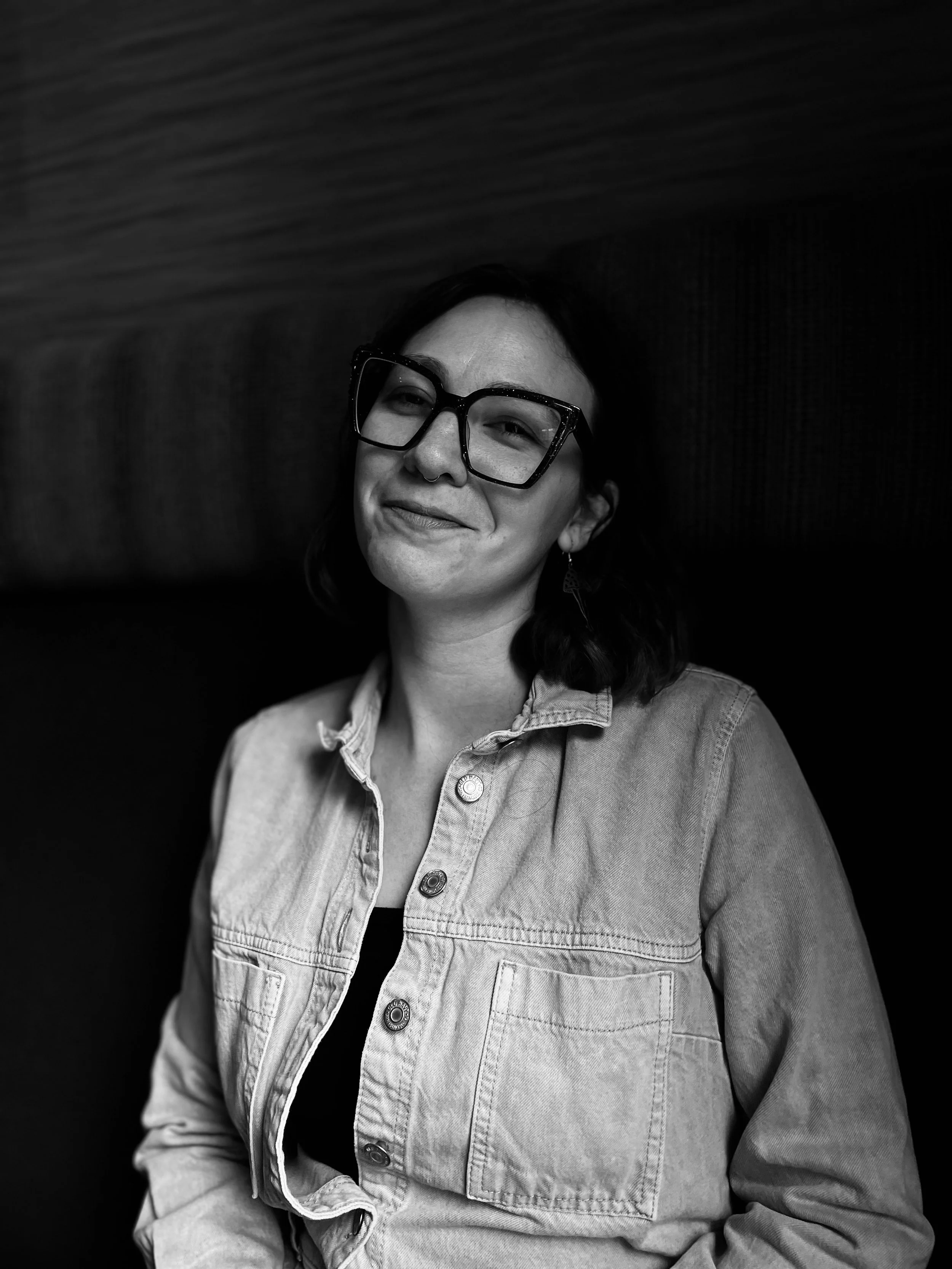
About
I’m a scholar and educator working across creative practice and psychological science.
I hold a BIS in Interdisciplinary Studies from Georgia State University, an MS in Curriculum & Instruction from North Carolina State University, and a PhD in Educational Psychology (STEAM Learning & Teaching) from the University of Illinois at Urbana-Champaign.
My work brings together behavioral design, media & archival analysis, data visualization, and studio-based inquiry to examine how knowledge is produced across art, science, and education.
I have participated in national interdisciplinary initiatives including Project Kaleidoscope (PKAL) and Humility in Inquiry (HiI), and have collaborated with museums such as Krannert Art Museum and Durham LIFE museum on exhibition (re)designs. In both scholarship and teaching, I aim to design environments that foster creative, reflective, and applied inquiry beyond passive knowledge acquisition. I find myself often reflecting on the limitations of disciplinary silos and creative practice, arguing the integration of arts and sciences in higher education is a necessary condition for innovation, critical thinking, and human-centered understanding.
My own research is supported by competitive grants and published in peer-reviewed psychology and education journals. But I continue to find myself returning to a single question that is driving my current direction of scholarship: what happens when creativity is treated not as a product, but as a process worthy of observing and preserving?
poshlust. is the structure I built to hold space to interrogate that question.
I aim to make space and support work that doesn’t resolve cleanly—through micro-residencies, extended follow-ups, and public exhibitions that track creative practice over time rather than compressing and reducing creativity & learning down to a final result.
-
Nabokov gave us the word.
poshlust: not merely bad taste, but the false sublime.
we keep the word because we need it—
to name what we work against.we are trained in systems that reward the visible:
quickly publish, mass produce, impress.here, we reject the notion of strictly valuing the fast and the visible:
creation, research, and innovation are not treated as finished objects,
but as processes shaped by time, attention, constraint, and environment.this is a space for us to elevate what is still forming.
a scientific dataset might unravel into visual story.
a painting might ask a research question.
theory and material refuse to stay in their lanes.what matters here are the moments usually left out:
the stalled attempt, the shift in direction,
the unexpected spark, the constraint that reshapes our vision.